
Performance Notes
Creatine and Physical Output: Patterns From Published Nutritional Research
Marcus Chen · 4 March 2026
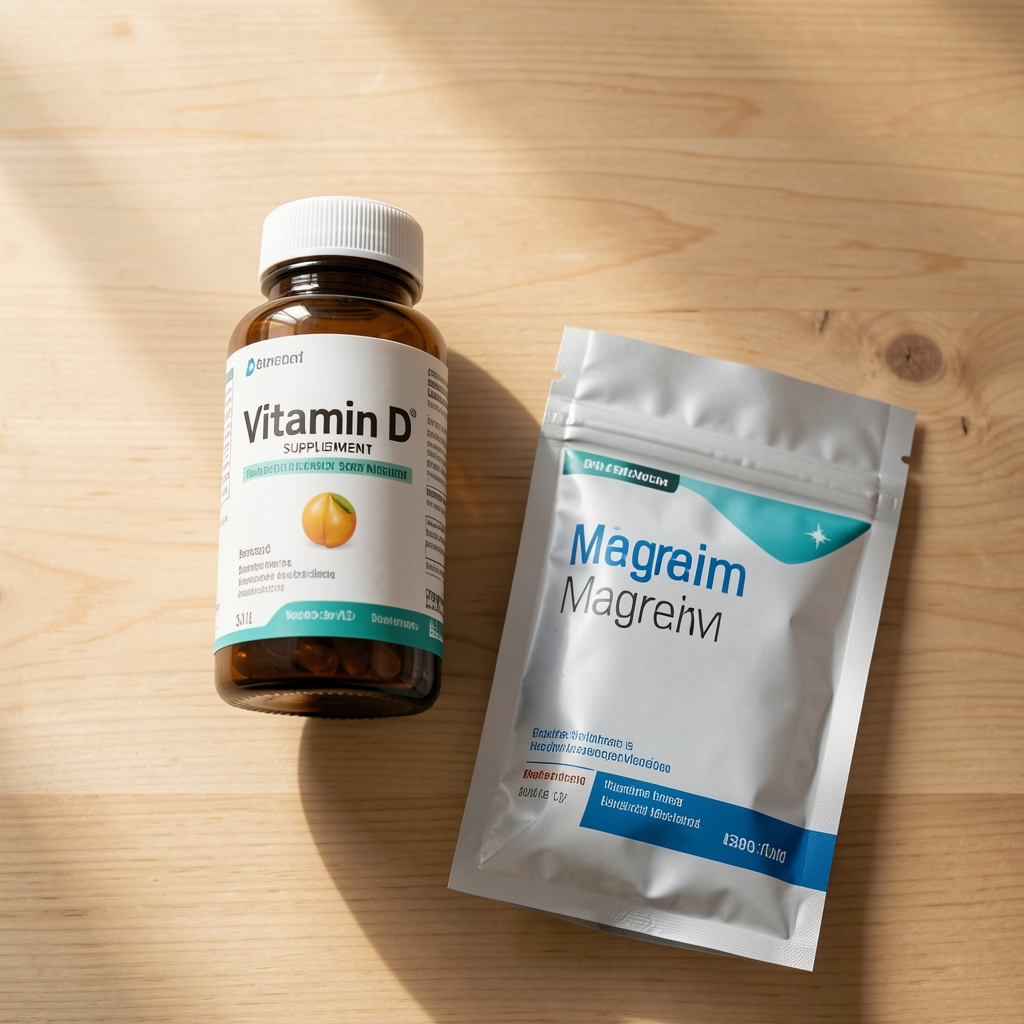
Among the various supplements that appear in men's daily nutritional routines, vitamin D and magnesium occupy a particular position: they are neither the most discussed nor the most dramatically marketed, yet their presence in published nutritional research is steady and substantial. This account examines how active men are incorporating both into morning routines, what the published literature observes about their nutritional roles, and where the evidence is stronger versus where it remains observational.
The appeal of a fixed morning supplement routine is partly logistical and partly psychological. For men with active schedules — gym visits, outdoor runs, structured resistance sessions — the morning window offers a consistent anchor point. Research published in nutritional habit journals consistently shows that supplement compliance increases when intake is attached to an existing daily anchor, such as the first meal or a morning coffee.
Vitamin D tends to be the first supplement many active men encounter in the form of a dedicated daily purchase, often prompted by awareness of limited sun exposure during working hours. In Indonesia, a country with abundant equatorial sun, the conversation around vitamin D is slightly different than in northern latitudes — outdoor workers may receive adequate sun exposure, while those spending extended hours in air-conditioned offices may not. The editorial position of this journal is to observe these patterns rather than make sweeping nutritional recommendations.
Magnesium enters many men's routines through a different pathway: the experience of delayed onset muscle soreness following intensified training periods, or through general awareness of dietary variety and whole food intake. Nuts, seeds, leafy greens, and legumes are reliable dietary sources of magnesium — but their consistent presence in men's daily eating is variable, and the supplement often fills a perceived gap.

The morning window is the most consistent supplement timing point documented across active men's nutritional habits — Ulemo Journal editorial observation, 2026.
Vitamin D is one of the more thoroughly researched micronutrients in the context of men's daily wellness. Its role extends beyond bone density — published studies in nutritional journals note its contribution to daily energy rhythm and overall nutritional balance. Deficiency patterns have been documented across populations with limited sunlight exposure and across men whose dietary variety is limited. The supplement form most frequently referenced in nutritional literature is vitamin D3 (cholecalciferol), which is the form the body produces through sunlight exposure and the form found in most daily supplement formulations.
Magnesium's presence in nutritional research is similarly well-documented. Over 300 enzymatic processes in the body involve magnesium as a cofactor — a fact cited across nutritional biochemistry literature. For active men, the most relevant published observations concern magnesium's contribution to muscle recovery rhythm after physical activity. Some nutritional research notes a relationship between magnesium status and sleep quality, though this area remains an active field of study rather than a settled conclusion.
The combination of vitamin D and magnesium in a single daily routine has been noted in several published papers examining the relationship between the two nutrients. There is some evidence — still considered preliminary — that adequate magnesium status may influence how effectively the body converts vitamin D to its active form. This relationship gives nutritional researchers a reason to examine the two together, and gives supplement-aware men a reason to consider both as part of the same daily stack.
"The nutritional case for vitamin D and magnesium together is not built on a single dramatic finding — it is built on the consistent presence of both in peer-reviewed nutritional literature spanning several decades."
Vitamin D is fat-soluble, which means its absorption is aided by the presence of dietary fat. This makes the morning meal — if it includes any fat-containing food — a natural pairing. Magnesium, depending on the compound form used, can vary in how it sits with the digestive system; many men note that taking it in the evening, rather than the morning, fits their routine more comfortably. Magnesium glycinate and magnesium citrate are the forms most frequently referenced in nutritional supplement literature for their absorption patterns.
Daily daily serving quantities fall outside this journal's editorial scope — such specifics involve variables that are individual to each person's nutritional status, dietary intake, and daily activity level. The editorial team recommends speaking with a qualified wellness or nutrition professional before introducing any new habit or routine to daily life, particularly if there are specific dietary requirements involved.
What the editorial observation does note is that the most consistent supplementers tend to be those who have attached the habit to a specific cue — the same glass of water, the same meal, the same time of day. The nutritional benefit of a supplement is inseparable from the behavioural consistency with which it is taken. This may be the most practically significant finding across all published supplement habit research.
The editorial position of Ulemo Journal is that supplements are additions, not replacements, to dietary variety. In the context of vitamin D and magnesium, this means acknowledging that both nutrients are available through food — but that the gap between recommended nutritional levels and average dietary intake for these two micronutrients has been consistently documented across nutritional surveys in multiple countries.
Fatty fish, egg yolks, and certain fortified foods contribute dietary vitamin D. Magnesium is abundant in dark chocolate, nuts, seeds, legumes, and whole grains. Men with genuinely varied and whole-food-rich diets may find that supplement quantities can be modest. Men whose daily food intake is less varied may find the supplement playing a more significant nutritional role.
The supplement review literature often frames this as an "insurance" function — a way of ensuring that nutritional gaps do not become sustained deficiencies over time. Whether that framing resonates depends on one's view of supplementation philosophy. The editorial team notes it without endorsing any particular approach as universally correct.
Most active men who supplement with vitamin D and magnesium do not supplement with only those two nutrients. The broader question of supplement stacking — which nutrients work alongside each other, which may compete for absorption, and how to build a coherent daily routine rather than an accumulating collection of individual products — is one the journal will return to in subsequent articles.
What this article observes is that vitamin D and magnesium together represent a reasonable starting point for men who are approaching supplementation with intention rather than impulse. They are backed by consistent nutritional research, available in well-studied supplement forms, and nutritionally available through whole foods for context-setting. The morning routine pairing makes practical sense for vitamin D; the evening pairing may make more practical sense for magnesium. Neither requires a complicated protocol to maintain consistently.
The editorial team of Ulemo Journal will continue to observe and document the supplement habits of active men from an independent, evidence-informed standpoint. The next article in this series examines creatine and physical output — a supplement category where the published nutritional evidence is among the most consistent in the field.

Marcus Chen is the primary editor of Ulemo Journal. He covers men's nutritional habits, daily supplement routines, and the evidence base behind active lifestyle choices. His editorial approach draws on published nutritional research and field observation.
More from Marcus →